Soffit and Fascia: What Reno Homeowners Should Know About These Important Roof Components
October 26, 2026
Soffit and fascia are two parts of a home that most people see every day without ever thinking about them. They sit along the edge of the roof, where the roofline meets the walls, and they quietly protect the structure, support the gutters, and help the attic breathe. For homeowners in Reno, NV and Sparks, NV, these components take a beating from intense sun, winter snow, and the freeze and thaw cycles that are common in Northern Nevada. When they are damaged, small problems can quickly turn into water damage, pest problems, or rot.
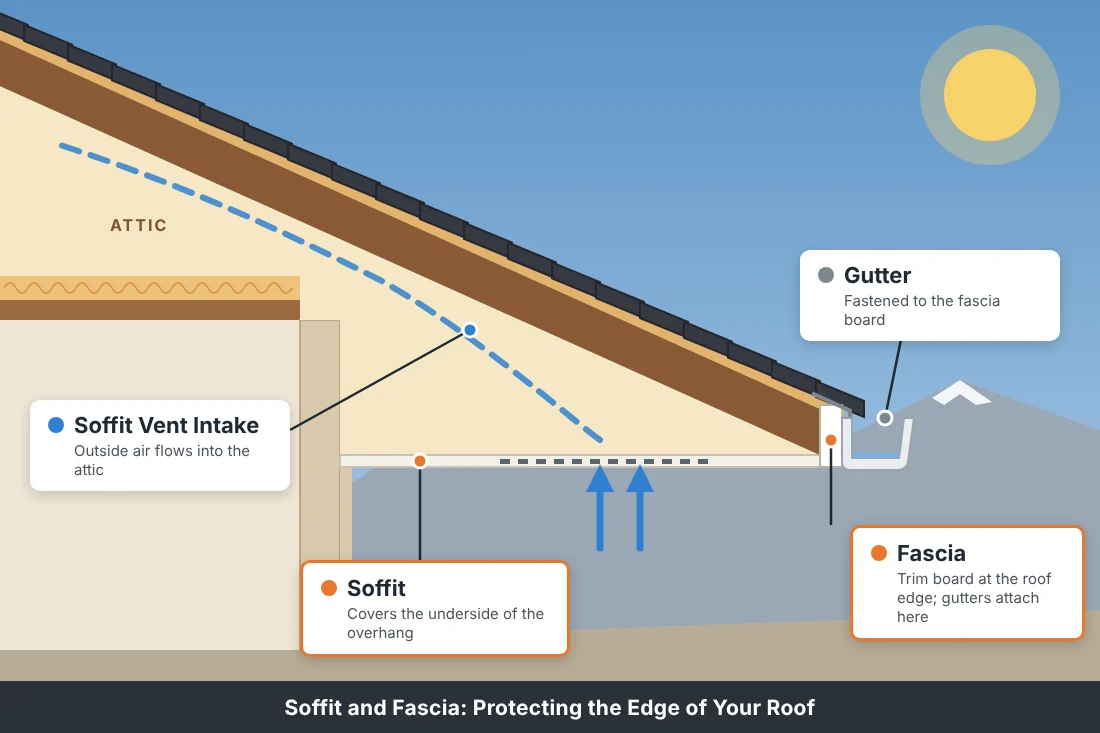
What Are Soffit and Fascia?
The fascia is the long, flat board that runs along the outer edge of the roof, facing outward. It is fastened to the ends of the rafters or trusses and forms the finished edge you see just below the shingles or tile. The soffit is the material that covers the underside of the roof overhang, spanning the space between the fascia and the exterior wall of the house.
Together, roof soffit and fascia close off the roof edge and give it a clean, finished look. Common materials include painted wood, aluminum, vinyl, and fiber cement, and many homes in Washoe County have wood fascia that has been wrapped or painted to help it hold up to the weather.
What Is the Difference Between Soffit and Fascia?
The easiest way to tell soffit and fascia apart is by direction. Fascia faces outward and runs vertically along the roof edge, while the soffit faces downward and runs horizontally underneath the overhang.
Their jobs are different as well. Fascia is mainly a protective and structural trim board that shields the rafter ends and gives the gutters something solid to hang from. Soffit protects the underside of the overhang from weather and pests, and on many homes it also provides intake airflow for the attic. Because they meet at the same corner of the roof, damage to one often affects the other, so a roofer will usually inspect fascia and soffit together.
What Does Roof Fascia Do?
Roof fascia protects the ends of the rafters or trusses from rain, snowmelt, and sun exposure. The fascia also creates a straight, finished line along the roof edge and provides a solid mounting surface for the drip edge and gutter system.
That connection to the gutters is one of the most important things to understand about fascia. When gutters clog or overflow, water often spills behind them and soaks directly into the fascia board. Over time, that can lead to rotted fascia, loose gutter fasteners, and gutters that pull away from the house. Keeping up with gutter maintenance is one of the best ways to protect your fascia and the roof edge behind it.
How Does Soffit Ventilation Help Your Roof?
On many homes, the soffit is where the attic breathes in. Vented soffit panels allow cooler outside air to enter the attic at the lowest point of the roof, and that air then rises and exits through ridge vents or other exhaust vents near the peak. This steady flow of air helps control attic heat in the summer and moisture in the winter, which protects both the roof deck and the roofing materials above it.
When soffit vents are blocked by insulation, painted over, or missing altogether, the attic can lose much of its intake airflow. That can lead to excess heat, condensation, frost in the attic, and conditions that contribute to ice dams along the roof edge. Our guide to roof ventilation in Reno, NV explains how intake and exhaust work together.
What Causes Soffit and Fascia Damage?
Water is the most common cause of soffit and fascia damage. Clogged or poorly pitched gutters, missing drip edge, and roof leaks near the eaves can all send water into these components, where it soaks into wood and causes rot over time. In Northern Nevada, ice dams and snowmelt that refreezes at the roof edge are another frequent source of moisture, which is the same cycle that causes roof leaks when snow melts in Reno.
Sun exposure plays a bigger role here than many homeowners expect. Reno's intense, high elevation sunlight dries out wood, breaks down paint, and leaves fascia boards cracked and exposed to moisture. Wind can loosen soffit panels and trim, while birds, bats, insects, and rodents often take advantage of small openings to get into the soffit and attic.
Signs Your Soffit or Fascia May Need Repair
Many signs of soffit or fascia damage can be spotted from the ground. Look for peeling or blistering paint, dark water stains, soft or crumbling wood, and fascia boards that look warped or uneven along the roofline. Gutters that sag, pull away from the house, or overflow behind the gutter instead of into it can also point to damaged fascia or gutter fascia damage that needs attention.
Under the eaves, watch for soffit panels that are loose, cracked, sagging, or missing. Stains or mildew on the soffit, nests or droppings near the roof edge, and signs of insects or animals going in and out are all reasons to have the area checked. If you are already looking at your gutters, our article on what to look for during a gutter inspection covers several of the same warning signs. Catching these problems early usually means a simpler fascia repair or soffit repair.
When Should a Roofer Inspect Soffit and Fascia?
A good time to have soffit and fascia inspected is in the fall, before Reno's winter weather arrives and snow and ice start building up along the roof edge. It is also wise to have them checked after a heavy storm or if you notice any of the warning signs above. A roof replacement is another natural opportunity, since the roofer is already working at the edge of the roof and can repair or replace damaged fascia before new drip edge and gutters are installed.
A professional roofer can evaluate the condition of the wood behind the trim, check whether soffit vents are open and providing proper airflow, and look for roof leaks or ventilation issues that may be causing the damage in the first place. Our roof inspection checklist shows the other areas a professional reviews during a full inspection, and you can contact Scott Roofing if you would like the roof edge on your home evaluated.
Protecting the Edge of Your Roof
Soffit and fascia may not get much attention, but they protect one of the most vulnerable areas of any roof. Keeping gutters clear, maintaining paint and trim, and making sure soffit vents stay open all help these components do their job through every Northern Nevada season.
Scott Roofing has served homeowners throughout Reno, Sparks, and Washoe County since 1948, and our team understands how sun, snow, and wind affect the roof edge on local homes. Whether you have noticed peeling paint, sagging gutters, or signs of pests near your eaves, a professional evaluation can help you address the problem before it reaches the rest of your roof.
For all your roofing needs in Reno, Scott Roofing provides professional roofing services to residential and commercial property. To request a quote or schedule a professional roof inspection, contact Scott Roofing today or call 775-331-5090.