Roof Ventilation in Reno, NV: Why Proper Attic Ventilation Matters
October 5, 2026
Roof ventilation is one of the least visible parts of a roofing system, yet it plays a major role in how long your roof lasts and how comfortable your home feels throughout the year. For homeowners in Reno, NV and Sparks, NV, proper attic ventilation helps manage the heat that builds up under the roof in summer and the moisture that can collect in the attic in winter. When ventilation is working as intended, outside air moves steadily through the attic and carries heat and humidity away before they can cause problems. When it is not, the effects usually show up slowly, in the form of aging shingles, higher energy bills, frost in the attic, or ice along the roof edge.
Northern Nevada's climate makes this especially important. Hot, dry summers, cold winters with snow, and large seasonal temperature swings place real demands on the space directly beneath your roof.
Why Is Roof Ventilation Important?
An attic can become extremely hot on a summer afternoon in Reno, and without adequate airflow that heat has nowhere to go. Trapped heat radiates down into living spaces, makes air conditioning work harder, and bakes roofing materials from underneath. Good roof ventilation helps keep attic temperatures closer to outdoor conditions, which supports both the roof and the comfort of the home.
Ventilation matters just as much in winter. Everyday activities like cooking, bathing, and running a dryer add moisture to indoor air, and some of that warm, humid air finds its way into the attic. If the attic is not ventilated properly, that moisture can condense on cold surfaces such as the underside of the roof deck, rafters, and nails. Repeated condensation can lead to damp insulation, stained wood, and the kind of moisture conditions that can encourage mold.
How Does Attic Ventilation Work?
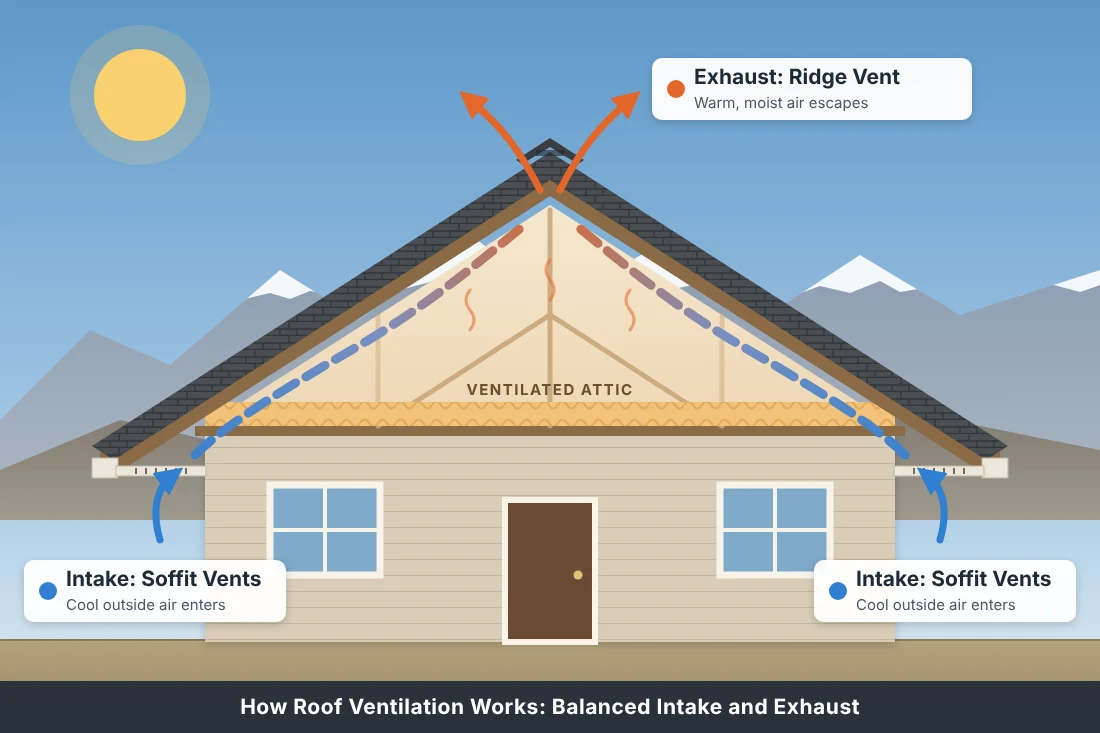
Most residential attic ventilation systems rely on a balance between intake and exhaust. Intake vents, usually located low on the roof at the eaves or in the soffits, allow cooler outside air to enter the attic. Exhaust vents, positioned at or near the ridge, allow warm, moist air to leave.
Balance is the key word. An attic with plenty of exhaust but too little intake may not move air effectively, and in some cases it can pull conditioned air out of the living space instead. Blocked soffit vents, insulation packed into the eaves, or incompatible vent types mixed on the same roof can all disrupt the intended airflow. Roof ventilation requirements are also addressed by building codes, which is one more reason to have ventilation evaluated by a qualified roofing contractor rather than guessing at the right amount.
What Types of Roof Air Vents Are Used?
There are several common types of roof air vents, and many homes use a combination of them. Ridge vents run along the peak of the roof and provide continuous exhaust, which is why they are frequently used on modern roof replacements. Box vents, sometimes called static or low profile vents, sit near the ridge and let hot air escape without any moving parts. Gable vents are located on the end walls of the attic, while soffit vents provide intake along the underside of the roof overhang.
Other roof ventilation systems include turbine vents, which spin as wind passes over them, and powered attic fans, which use a motor to pull air out of the attic. The right attic roof vents for one house may not be the best choice for another, so ventilation is usually evaluated as a complete system rather than one vent at a time.
Signs Your Roof May Have Poor Ventilation
Many homeowners rarely look into their attic, so ventilation problems often go unnoticed until they cause other issues. Upstairs rooms that stay uncomfortably hot in summer, rising cooling costs, or an attic that feels like an oven on a warm day can all point to limited airflow. In winter, frost on the underside of the roof deck, damp or matted insulation, or a musty smell in the attic suggest that moisture is not escaping as it should.
From outside, watch for heavy icicles and ice buildup along the roof edge after a snowfall. Ice dams can form when heat escaping into the attic melts snow on the upper roof and that water refreezes at the colder eaves. Poor ventilation is not the only cause, since insulation and air leaks play a role as well, but it is a common contributing factor. Our guide to why roofs leak when snow melts in Reno explains how this cycle can lead to water intrusion.
Can Poor Attic Ventilation Affect Your Roof?
It can, and the effects tend to build quietly over several years. Excess heat can shorten the useful life of shingles and other roofing materials, while trapped moisture can weaken the roof deck that supports everything above it. Wood that stays damp for long periods may warp, delaminate, or begin to deteriorate, which can eventually create soft spots or sagging areas.
Ventilation can also matter for warranty purposes, since many roofing manufacturers include proper attic ventilation in their installation requirements. This is one reason experienced roofers evaluate existing ventilation before a roof replacement in Reno or Sparks rather than installing new shingles over the same conditions. Correcting intake and exhaust during a replacement is usually far more practical than revisiting it later.
When Should a Roofer Inspect Your Roof Ventilation?
A roof replacement is an ideal time to review ventilation, because the roofer can see the roof structure and adjust intake and exhaust as part of the project. It is also worth having ventilation checked if you notice any of the warning signs above, if attic space has been finished or converted, or if past work on the home may have blocked existing vents. Routine inspections are another good opportunity, and our article on how often you should have your roof inspected explains a sensible schedule for Reno homeowners.
Avoid walking the roof or crawling through tight attic spaces to diagnose problems yourself. A roofing professional can safely evaluate vent placement, intake and exhaust balance, insulation clearance at the eaves, and signs of heat or moisture damage. If you have concerns about attic heat, condensation, or ice dams, you can contact Scott Roofing to schedule a roof inspection that includes a review of your ventilation.
Protecting Your Roof Through Every Northern Nevada Season
Roof ventilation does its work out of sight, but its impact reaches from your attic to your energy bills to the lifespan of your roof. In a climate with intense summer sun, cold winter nights, and frequent temperature swings, a well balanced attic ventilation system helps the entire roof perform the way it was designed to.
Scott Roofing has served homeowners throughout Reno, Sparks, and Washoe County since 1948, and that experience includes seeing how roofs and attics respond to Northern Nevada weather year after year. Whether you are planning a roof replacement or simply want to know your attic is breathing properly, a professional evaluation is a practical step toward protecting your home for the long term.
For all your roofing needs in Reno, Scott Roofing provides professional roofing services to residential and commercial property. To request a quote or schedule a professional roof inspection, contact Scott Roofing today or call 775-331-5090.