Why Roofs Leak When Snow Melts in Reno (And What Homeowners Should Do)
February 2, 2026
Winter roof leaks can be confusing. Many Reno homeowners and Sparks homeowners expect problems during a snowstorm, but roof leaks when snow melts are often more common. As temperatures rise during the day and drop at night, water can move into small weak points in the roofing system and show up inside the home days later.
If you are seeing staining on ceilings, dripping near exterior walls, or moisture in the attic, you may be dealing with roof damage from snow and ice. Northern Nevada weather creates a specific set of conditions that can expose aging shingles, compromised flashing, and ventilation issues. This article explains why these leaks happen, what signs to look for, and why a professional inspection is the safest next step.
Scott Roofing has served Reno, NV and Sparks, NV since 1948. Our team understands the Sierra snowpack, mountain weather conditions, and freeze thaw cycles that impact Washoe County homes. When winter roof leaks appear, we help homeowners find the true source, not just the visible symptom, so repairs hold up long term.
Why Roof Leaks When Snow Melts Are So Common in Northern Nevada
Snow sitting on a roof is not always the main problem. The real risk begins when the snow melts. In the high desert climate, sunny winter days can warm roof surfaces enough to create meltwater, even when air temperatures still feel cold. That water then refreezes overnight as temperatures drop.
These freeze thaw cycles stress roofing materials and create repeated water movement across shingles, valleys, flashing, vents, and gutter lines. If a roof has minor vulnerabilities, melting snow can push water into areas it would not normally reach. This is a common cause of a leaking roof from snow, especially on older roofs or roofs that have not been inspected recently.
Roof Damage from Snow, Ice, and Freeze Thaw Cycles
Roof damage from snow can happen in several ways. Heavy snow adds weight, but meltwater is often the bigger issue. When snow melts and refreezes, it can loosen materials over time and create openings where water can enter.
Roof damage from ice is often tied to refreezing at the eaves, in valleys, and around roof penetrations. Water can work under shingle edges, around flashing, and along seams. Over time, freeze thaw roof damage may lead to cracked shingles from cold, lifting shingle edges, and small gaps that allow water intrusion during melt periods.
Even small problems can become winter roof leaks, especially when melting snow repeatedly feeds the same vulnerable area.
How Ice Dams Form and Why They Cause Leaks
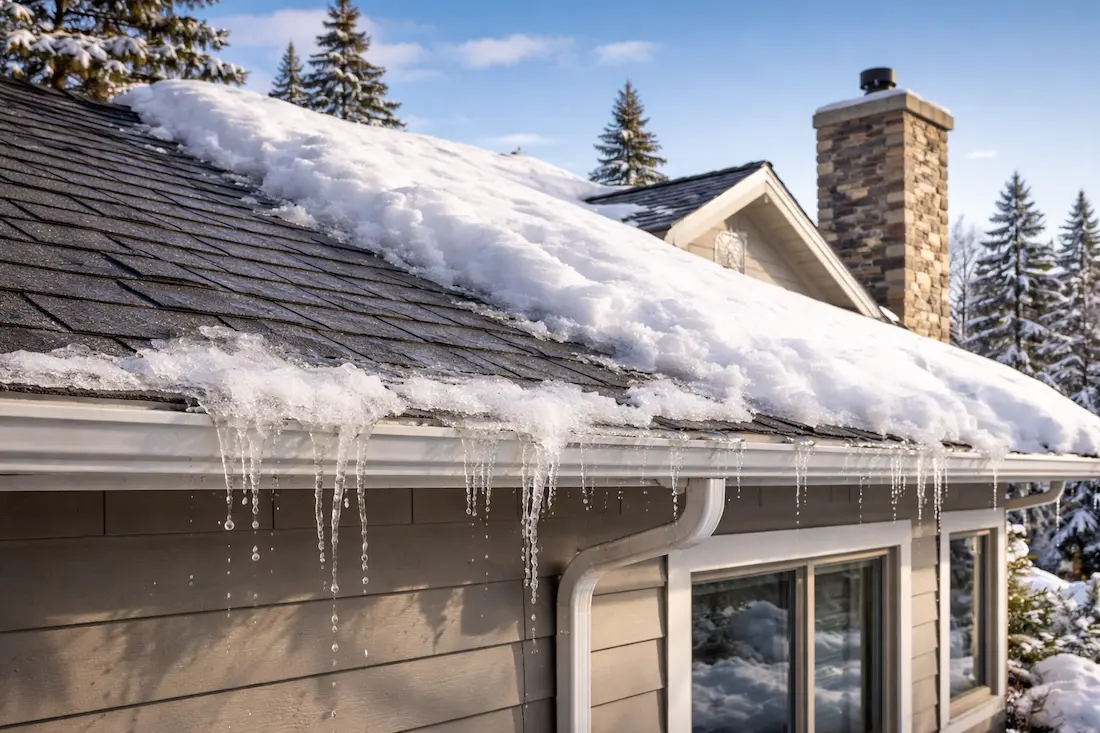
One of the most common winter causes of leaking roof snow issues is ice dam roof damage. Ice dams form when snow melts on the warmer upper portion of the roof and refreezes near the colder edge. This creates a ridge of ice that blocks drainage.
When drainage is blocked, water pools behind the ice dam. That pooled water can be forced under shingles, leading to ice dam roof leaks. This type of roof damage from ice dams often shows up as interior staining near exterior walls, damp insulation, or moisture in attic spaces.
Ice dams are also a sign that attic insulation and roof ventilation may need attention. Warm air escaping into the attic can increase snow melt, which increases the chance of refreezing at roof edges.
Why Winter Roof Leaks Can Be Hidden or Intermittent
Many homeowners are surprised when leaks appear only during the day, or only after a warm stretch. That is because roof leaks after snow melts can stop and start as temperatures change. Water may enter the roof system during melt periods, then slow down or stop when everything refreezes.
Leaks can also travel before becoming visible. Moisture may run along roof decking, rafters, or insulation and appear several feet away from the actual entry point. This is why hidden roof leaks are common during Nevada winter weather and why a clear stain does not always reveal the true source.
Attic moisture from snow melt can also build quietly, leading to damp insulation, mold risk, and reduced energy efficiency.
Signs of Roof Damage After Snow and Ice
If you want to know how to tell if your roof was damaged by winter, look for warning signs inside and outside the home. Common signs of roof damage after winter include:
- Water stains on ceilings or walls
- Dripping during warm afternoons or after sunny days
- Moist or matted insulation in the attic
- Musty odors or visible moisture in attic spaces
- Ice buildup along the roof edge or in gutters
- Shingles that look lifted, cracked, or out of place after storms
If you notice any of these signs, a roof inspection after winter is a smart next step, even if the leak seems minor. Early winter roof damage repair often prevents larger problems in spring.
Does Insurance Cover Roof Leaks from Snow
Homeowners often ask, does insurance cover roof leaks from snow. Coverage depends on your policy and what caused the leak. In many cases, insurance may help if the damage was sudden and related to a covered event, such as ice dam roof damage or snow damage to roof components that led to water intrusion.
Insurance often does not cover issues related to wear, aging materials, or deferred maintenance. Because the difference can be important, documentation matters. A professional roof inspection can help identify the likely cause and provide clear findings that homeowners can reference when speaking with an insurance provider.
If you are unsure, it is still worth scheduling an evaluation. Even if coverage does not apply, catching the issue early can reduce repair costs and prevent interior damage.
What to Do If Your Roof Is Leaking from Snow
If you have a roof leak snow issue, act quickly to reduce damage. Place a container under active dripping, move valuables away from the area, and take photos of visible staining or moisture. If possible, note whether the leak appears after snowstorms or during warmer melt periods.
Avoid climbing onto the roof in winter conditions. Snow and ice make roofs dangerous, and the source of the leak is rarely obvious without a trained inspection. Temporary roof leak solutions may reduce short term interior damage, but they do not replace professional evaluation and repair.
A qualified local roofing contractor can locate the true entry point and recommend winter roof damage repair that matches the roofing system and the specific cause.
Why a Professional Roof Inspection After Winter Is Worth It
A professional roof inspection after winter can identify small issues before they turn into costly repairs. Inspections look closely at shingles, flashing, vents, valleys, roof edges, and drainage systems that may have been stressed by snow and ice.
This is also the best time to catch problems that will worsen with spring moisture. Early repairs protect insulation, drywall, framing, and interior finishes. They also support long term roof protection by addressing vulnerabilities before the next storm cycle.
Trust Scott Roofing for Winter Roof Leaks in Reno and Sparks
Scott Roofing began as a local Reno contractor and has grown into a trusted name across Reno, Sparks, and Northern Nevada. Our team understands the local climate stresses that lead to winter roof leaks, including rapid snow melt, strong sun exposure, and freeze thaw cycles.
We focus on honest evaluations, clear recommendations, and repairs designed for long term performance. Whether you need an inspection, emergency leak repair, or guidance on winter roof maintenance, our experience helps protect Washoe County homes year after year.
If you are dealing with roof leaks when snow melts, do not wait until spring reveals a larger issue. A professional inspection can help you understand what is happening and what to do next.
For all your roofing needs in Reno, Scott Roofing provides professional roofing services to residential and commercial property. For more information contact Scott Roofing at 775-331-5090.