What Is Roof Decking? Signs Your Roof Deck May Need Repair or Replacement
October 13, 2026
Most homeowners think of their roof as the shingles or tile they can see from the street, but the layer underneath does much of the real work. Roof decking is the solid surface that sits on top of the rafters or trusses and gives every other roofing material something to attach to. For homeowners in Reno, NV and Sparks, NV, a healthy roof deck is what keeps a roof straight, secure, and able to handle snow, wind, and decades of weather. Because it is hidden, problems with roof decking usually go unnoticed until they start showing up as sagging, soft spots, or leaks inside the home.
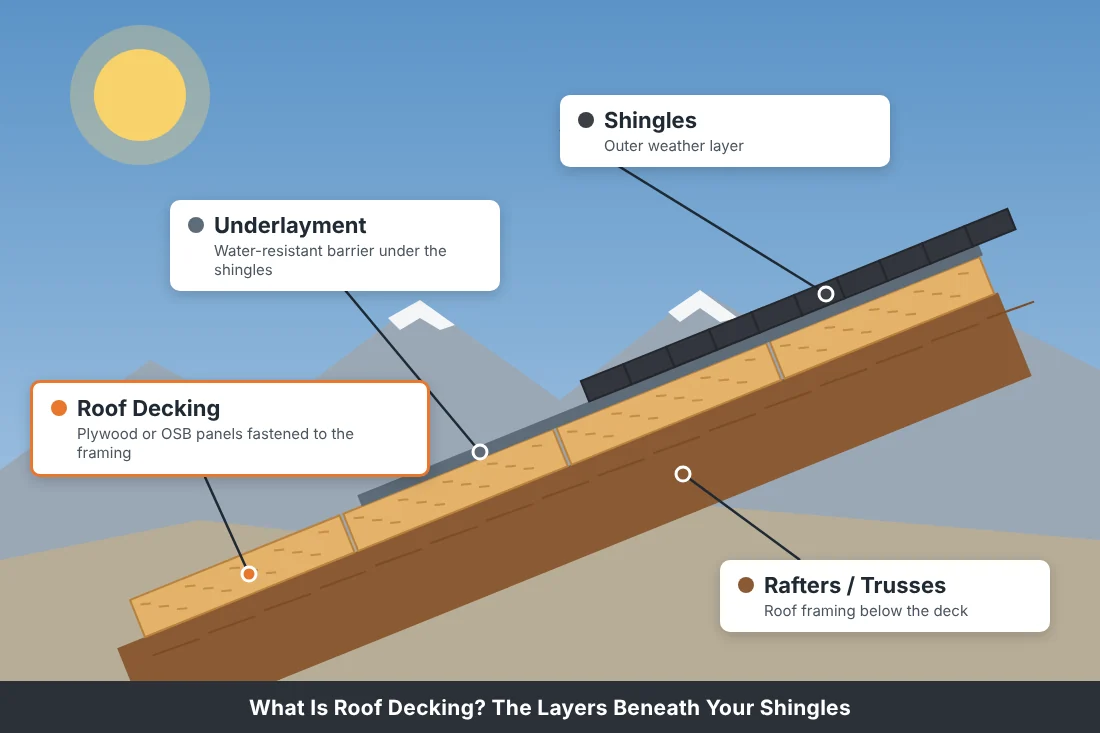
What Is Roof Decking?
Roof decking, often called the roof deck, is the layer of boards or panels fastened directly to the roof framing. It forms the structural base of the roofing system, sitting between the rafters or trusses below and the underlayment, flashing, and shingles or tile above.
The roof deck also does more than hold shingles in place. It spreads loads such as snow, wind pressure, and foot traffic across the roof framing, and it helps tie the structure together so the roof acts as one solid assembly. When decking is weakened, the materials above it lose their support, and even a brand new layer of shingles can look wavy or fail early.
What Is a Roof Deck Made Of?
On most homes in Northern Nevada, the roof deck is made of wood based panels, usually plywood or oriented strand board (OSB). Plywood is built from layers of wood veneer glued together, while OSB is made from compressed wood strands and resin and has become the most common choice on newer homes.
The right roof decking material and thickness depend on factors such as rafter or truss spacing, the weight of the roofing material, and local building code requirements. Panels are also installed with small gaps between them so the wood can expand and contract with temperature and humidity changes, which matters in a climate with Reno's large seasonal swings.
What Are the Different Types of Roof Decking?
While plywood and OSB panels are the most common, there are several types of roof decking you may find on a home in Reno or Sparks. Older homes often have plank decking, which is made of individual wood decking boards, typically 1x6 or 1x8 lumber, laid across the rafters. Some roofs, particularly those originally built for wood shakes or certain tile systems, use spaced board decking with gaps between the boards rather than a solid surface.
Tongue and groove decking is another option, often used where the underside of the roof is left exposed as a finished ceiling. The type of decking on your home can affect which roofing materials can be installed and what a future roofing project involves. If you are weighing new materials, our guide to the best roofing materials for Reno homes is a helpful place to start.
What Causes Roof Decking Damage?
Water is the most common cause of roof decking damage. A small leak from worn shingles, a cracked pipe boot, or leaking roof flashing can let moisture reach the deck long before any stain appears on a ceiling. Wood that stays damp can soften, delaminate, and eventually rot. In Northern Nevada, snow that melts and refreezes at the roof edge can also push water under shingles, which is one reason roofs often leak when snow melts in Reno.
Moisture can also come from inside the home. When an attic is poorly ventilated, warm humid air condenses on the underside of the cold roof deck during winter, and that repeated wetting can damage the wood from below. Our article on roof ventilation in Reno, NV explains how intake and exhaust vents help prevent this. Other causes include age, heavy snow loads, improper installation such as panels installed without expansion gaps, and decking that was too thin for the roofing material placed on top of it.
Signs Your Roof Deck May Be Damaged
Many signs of a damaged roof deck can be spotted without ever climbing onto the roof. From the ground, look for a roofline that dips or sags between rafters, shingles that appear wavy or uneven, or areas where the roof surface no longer looks flat.
Inside the attic, use a flashlight to check the underside of the roof deck. Water stains, dark spots, mold growth, rusted nails, frost in winter, or wood that appears swollen or separated into layers can all point to moisture problems. A roofer walking the roof may also notice soft or spongy spots underfoot, which is something homeowners should never try to test themselves. If you see any of these signs, a professional roof inspection can confirm what is happening before the problem spreads.
Can Damaged Roof Decking Be Repaired?
In many cases, yes. When damage is limited to a small area, such as the deck around a single leak, a roofer can remove the shingles and underlayment in that section, cut out the damaged decking, and install new material before resealing the roof. This kind of targeted roof repair in Reno can stop the problem early.
The key is finding and fixing the source of the damage at the same time. Replacing a few boards without correcting the leak, ventilation issue, or flashing problem that caused the damage will only lead to the same result later. A good roofing contractor will look for the underlying cause and explain your options clearly. Our guide on whether to repair or replace your roof covers how that decision is usually made.
When Does Roof Decking Need to Be Replaced?
Roof decking generally needs to be replaced when it is rotted, delaminated, sagging, or too weak to hold fasteners securely. Larger sections of decking are often replaced during a roof replacement, because that is when the old roofing is removed and the full deck can finally be seen. It is common for a roofer to discover damaged decking during tear off that was impossible to see beforehand.
Installing new shingles over compromised decking can shorten the life of the new roof, cause fastening problems, and affect manufacturer warranty coverage. If you are planning a roof replacement in Reno or Sparks, ask your roofer how they evaluate the decking and how they handle any damaged areas they find so there are no surprises once the work begins.
Protecting the Foundation of Your Roof
Roof decking may be out of sight, but it is the foundation that every other part of your roof depends on. Catching moisture problems early, keeping the attic properly ventilated, and addressing leaks promptly all help protect the roof deck and extend the life of your roof.
Scott Roofing has served homeowners throughout Reno, Sparks, and Washoe County since 1948, and our team has seen firsthand how Northern Nevada weather affects what lies beneath the shingles. If you have noticed sagging, staining in the attic, or other warning signs, you can contact Scott Roofing to schedule an inspection and get a clear picture of your roof's condition.
For all your roofing needs in Reno, Scott Roofing provides professional roofing services to residential and commercial property. To request a quote or schedule a professional roof inspection, contact Scott Roofing today or call 775-331-5090.